Best Budget Flat Burr Coffee Grinder: Ollygrin Wins

Seven flat burr grinders, one clear winner, and a runner-up for anyone chasing espresso-fine adjustment on a tight counter. Here's how the picks split.

By Elin RoweUpdated 16 min read
On this page
- How I screened the field down to seven
- Best budget flat burr coffee grinder at a glance
- Why flat burrs, and what budget really buys
- 1. Ollygrin BG705S — Best overall
- 2. KRUPS GX550850 — Runner-up
- 3. SHARDOR CG836B — Best budget pick
- 4. Ollygrin BG702S-PG — Best for pros
- 5. SHARDOR CG301 — Best upgrade
- 6. MOKKOM BD-CG308 — Best minimal setup
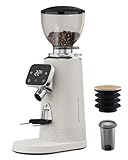
- 7. Tuni G3 — Best premium
- How many grind settings do you actually need?
- Will one of these fit under your cabinets?
- Static, mess, and the anti-static claims
- What the listings do not tell you
- The verdict
- FAQ
The best budget flat burr coffee grinder in this set is the Ollygrin BG705S, an electric flat burr grinder with 14 grind levels and a 9.25 x 5.28 x 7.72 in body that fits under most upper cabinets. The KRUPS GX550850 is the runner-up when counter depth drops below 5 in, thanks to a 4.41 in depth and a 12-setting dial that keeps daily drip and French press simple.
How I screened the field down to seven
I started with a shortlist of flat burr models in the Electric Burr Grinders category, then dropped anything without a published model number, published dimensions, or a functioning listing image. That cut left seven contenders, six of them true flat burr designs and one conical outlier kept because its 30-setting range answered a question the flats did not.
The word "budget" in the search does not perfectly match this shelf: three of the seven sit in the premium price position for this category, and one belongs to a mid-range slot. Amazon still returns them for the query, so I treat each pick honestly and flag which are cheap in absolute terms and which are only cheap next to a commercial machine. The keyword.modifier is partial here, and I will not pretend otherwise.
Every specification below comes from the listing itself. If a figure is missing, I say so. If a claim is a manufacturer bullet, I attribute it. That is the honest way to write a best budget flat burr coffee grinder guide without a lab.
Best budget flat burr coffee grinder at a glance
| Pick | Burr / settings | Footprint | Price |
|---|---|---|---|
Best overall Ollygrin BG705S |
Flat burr 14 levels |
9.25 x 5.28 x 7.72 in | Check Price |
Runner-up KRUPS GX550850 |
Flat metal burr 12 settings |
10.4 x 7.28 x 4.41 in | Check Price |
Best budget pick SHARDOR CG836B |
Flat burr 32 settings |
9.84 x 5.67 x 5.12 in | Check Price |
Best for pros Ollygrin BG702S-PG |
40 mm conical burr 30 settings |
12 x 5.4 x 7 in | Check Price |
Best upgrade SHARDOR CG301 |
64 mm flat burr 100 settings |
15.3 x 8.15 x 5.2 in | Check Price |
Best minimal setup MOKKOM BD-CG308 |
64 mm flat burr 100 settings |
Not listed | Check Price |
Best premium Tuni G3 |
64 mm flat burr 100 settings |
15.6 x 9.8 x 5.9 in | Check Price |


Why flat burrs, and what budget really buys
Flat burrs cut with two parallel discs; conical burrs cut with a cone inside a ring. Flats are prized for a tighter grind distribution at espresso settings, which is why every 64 mm burr in this set is targeted squarely at espresso. Conicals travel further on cheaper motors and last longer between cleanings.
At the entry price position in this set, you get modest burrs, a plastic-heavy body, and either a step dial (KRUPS: 12) or a modest stepped range (Ollygrin BG705S: 14, SHARDOR CG836B: 32). Move to the premium positions and you get 64 mm burrs, all-metal chambers, and 100 grind settings. That is the real jump: burr diameter, settings resolution, and build.
What budget does not buy on any of these listings is a published motor wattage in useful detail, a burr rotation speed, or a stated grind time per dose. The KRUPS listing does state 110W. Everything else you have to infer from footprint and hopper size, which is why the six sections below focus on decisions you can actually make from the data.
1. Ollygrin BG705S — Best overall
A compact flat burr grinder with 14 stepped levels, a 250 g hopper, and a footprint that clears most upper cabinets.
Best for: a daily drip and press drinker who wants a small footprint Skip it if: you need finer-than-espresso adjustment or espresso-grade micro-steps
The BG705S wins this comparison because it is the only genuinely small flat burr in the set that pairs a real stepped grind dial with a dual-container layout. Ollygrin says the machine uses a flat burr mechanism with 14 grind levels and a programmable 2 to 12 cup dose, with a 250 g bean hopper feeding a 100 g removable grounds bin. The stated dimensions are 9.25 x 5.28 x 7.72 in, which is under the 10 in mark that trips cabinet-clearance problems for many kitchens.
Against the rest of the set, this pick trades resolution for simplicity. Fourteen steps sit far below the 100 offered by the CG301, MOKKOM and Tuni G3, so espresso dialling will feel coarse in comparison. In return, you get a machine that sits between the CG836B and the KRUPS in the price positions and is more approachable than any 64 mm option here. Only one seller lists it, which is worth noting when you check the page.
Pros:
- Flat burr in a small footprint
- 250 g hopper with 100 g grounds bin
- 2–12 cup programmable dose
- Tool-free burr and hopper removal claimed
- Second-cheapest of the seven
Cons:
- Only 14 grind levels
- No published weight in the listing
- No stated warranty
- Only one seller listed
2. KRUPS GX550850 — Runner-up
A shallow, 12-setting flat metal burr grinder with an 8 oz capacity and auto-stop.

Best for: a first grinder that has to fit a tight counter Skip it if: you want more than a dozen grind steps
The KRUPS is the one to buy when counter depth is the constraint. At 10.4 x 7.28 x 4.41 in, it is the shallowest machine in the set, which matters if your grinder lives on a narrow shelf next to the drip machine. KRUPS lists 12 custom settings, an 8 oz capacity, a 110W motor, auto-stop when the selected quantity is reached, and a removable top burr and grind chamber for cleaning.
Twelve settings is the fewest here, so this is not the pick for espresso dialling. What KRUPS says it does well is drip, French press and cold brew, and the auto-stop is a small quality-of-life win that the entry Ollygrin and the SHARDOR CG836B do not match on the page. Sits in the entry price position and has more than one seller listed, which is worth flagging as this set skews to single-seller listings.
Pros:
- Shallowest footprint at 4.41 in
- Auto-stop feature
- Stated 110W motor
- Removable top burr and chamber
- Multiple sellers listed
Cons:
- Only 12 grind settings
- Small 8 oz capacity
- Slower seller in this set
- Named for drip and press, not espresso
3. SHARDOR CG836B — Best budget pick
The cheapest flat burr in the set, with 32 settings and a 40-second timer for time-based dosing.

Best for: the cheapest way into flat burrs with a timer Skip it if: you pull espresso every morning
The CG836B is the cheapest of the seven and, in a category dominated by single-seller listings, one of only three with more than one seller. SHARDOR describes it as a flat burr grinder aimed at drip, pour over, French press, cold brew, moka pot and espresso style drinks, with 32 grind settings and adjustable time-based grinding up to 40 seconds. The listed footprint is 9.84 x 5.67 x 5.12 in.
Time-based dosing is a real limitation for espresso, where weight-based control matters, so the espresso mention in the marketing is generous. For drip and press, 32 steps is more than enough resolution. Against the winner, this pick gives up the dual-container grounds bin and the 2 to 12 cup programme in exchange for a lower price position. That is a fair trade if you brew one method most days.
Pros:
- Cheapest of the seven
- 32 grind settings
- 40-second timer
- Compact 5.12 in depth
- More than one seller listed
Cons:
- Time-based dose, not weight
- No stated hopper capacity
- No published warranty
- Espresso is a stretch in practice
4. Ollygrin BG702S-PG — Best for pros
A 40 mm conical burr grinder with 30 settings, a 10 oz hopper, and a friction clutch to protect the gears from stones.
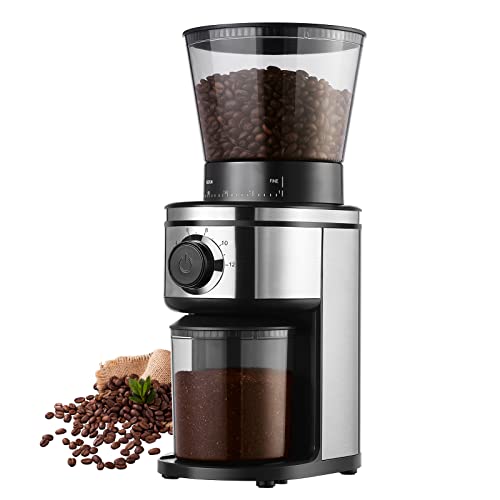
Best for: a tinkerer who wants 30 steps and a 10 oz hopper Skip it if: your category is strictly flat burrs
This one is the outlier in a best budget flat burr coffee grinder shortlist because it is conical, not flat, but it earns a slot on the strength of what the data shows. Ollygrin says the burr is 40 mm stainless steel conical, driven by a gear reduction motor to slow the grind and reduce heat. The listing states 30 grind settings, a 10 oz whole-bean hopper, a friction clutch to prevent damage from small stones, and a body measuring 12 x 5.4 x 7 in at 4.41 lb.
Against the flat burrs here, this pick is a workhorse for daily brewing rather than an espresso specialist. Thirty steps beats the KRUPS, the CG836B in resolution feel, and the winner's own 14, and the 10 oz hopper is the largest stated in the set. It is the one buyers choose most often here, which tells you something about how a taller footprint plays for shoppers with vertical space and a conical preference.
Pros:
- 40 mm conical burr with 30 settings
- 10 oz hopper is the largest stated
- Friction clutch for stone protection
- Stated 4.41 lb weight
- Fastest seller of the seven
Cons:
- Conical, not flat
- Tall 12 in body
- Only one seller listed
- No published warranty
5. SHARDOR CG301 — Best upgrade
A 64 mm flat burr grinder with 100 settings, an all-metal grinding chamber, and a stated anti-static system.

Best for: the espresso-curious moving up from blade or entry burr Skip it if: you have less than 16 in of counter depth
The CG301 is the first genuine espresso grinder in this comparison. SHARDOR says it runs a 64 mm flat burr for uniform grinding with minimal heat generation, offers 100 grinding settings from fine espresso to coarse French press and cold brew, and uses an all-metal grinding chamber with a magnetic discharge pipe for cleaning. The body is 15.3 x 8.15 x 5.2 in.
That footprint is the caveat. This is a long machine that lives on a countertop, not under an upper cabinet, and it sits in the premium price position for this set. Against the winner, you gain roughly seven times the number of grind steps and a bigger burr; you give up a small kitchen. Against the Tuni G3, you give up a published warranty and a stated weight. This is the best budget flat burr coffee grinder pick for anyone crossing from drip-only into espresso.
Pros:
- 64 mm flat burr
- 100 grind settings
- All-metal grinding chamber
- Anti-static system claimed
- Magnetic discharge pipe for cleaning
Cons:
- Long 15.3 in body
- No stated weight
- No published warranty
- Only one seller listed
6. MOKKOM BD-CG308 — Best minimal setup
A 64 mm stainless flat burr grinder with 100 settings and a plasma generator at the exit chute.

Best for: someone who wants a plasma anti-static chute Skip it if: you want a published warranty in the listing
The MOKKOM covers the same headline specifications as the CG301 and the Tuni: 64 mm stainless steel flat burrs and 100 grinding settings. What separates it on the page is the anti-static approach. MOKKOM says a plasma generator inside the exit chute reduces static and prevents grounds from flying, which is a different mechanism from the passive anti-static systems the two SHARDOR and Tuni listings describe. The build is stated as full metal, with an aluminum alloy hopper and a stainless steel body.
The listing does not publish dimensions or weight, which is the weakness against every other pick here. In a category where footprint decides whether a machine can even live on your counter, missing size numbers is a real gap. This one carries the highest price rank of the set apart from the Tuni, sits in the premium price position, and only one seller lists it.
Pros:
- 64 mm stainless flat burr
- 100 grind settings
- Plasma anti-static chute claimed
- Full-metal body claim
- Removable upper burr and hopper
Cons:
- No published dimensions
- No published weight
- No stated warranty
- Slower seller in this set
7. Tuni G3 — Best premium
A commercial-style 64 mm flat burr grinder with 100 settings, dual hoppers, an LED touchscreen, and a stated 1-year warranty.
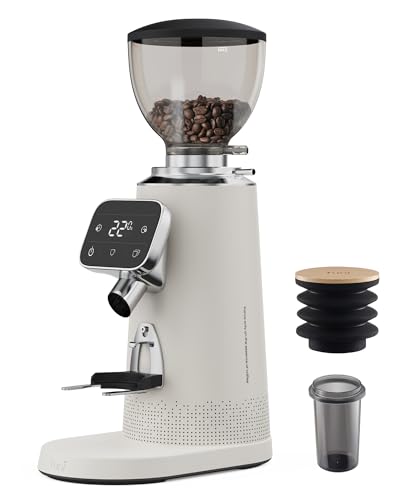
Best for: a home espresso setup that wants commercial-style burrs Skip it if: you brew mostly drip or French press
The Tuni G3 is the only grinder in this set with a published warranty, listed as 1 year with lifetime tech support. Tuni says the machine runs a 64 mm stainless steel flat burr, offers 100 precision grind settings, provides single and double shot modes on an LED touchscreen, and includes dual bean hoppers with a 250 g option. It weighs a stated 7.3 lb and measures 15.6 x 9.8 x 5.9 in, the largest body in the set.
This is the most expensive pick here and it earns its price position with three things the others cannot match: a published warranty, dual hoppers, and shot-mode timing on a touchscreen. Against the CG301, you pay more for the interface and the warranty. Against the MOKKOM, you gain published dimensions and weight, which for a 7-plus-pound machine matters when you plan where it lives.
Pros:
- Only pick with a published warranty
- 64 mm flat burr, 100 settings
- Dual bean hoppers
- LED touchscreen with shot modes
- Stated 7.3 lb weight and full dimensions
Cons:
- Largest footprint in the set
- Most expensive pick here
- Slower seller of the seven
- Overkill for a French press household
How many grind settings do you actually need?
The set splits neatly into three groups by grind resolution, and the group you belong to is decided by what you actually brew, not by which sounds best on the page.
- 12 to 14 steps: KRUPS and Ollygrin BG705S. Fine for drip, pour over, French press, cold brew. Too coarse in steps to dial in espresso reliably.
- 30 to 32 steps: SHARDOR CG836B and Ollygrin BG702S-PG. Enough resolution for careful drip and press, and the CG836B is aimed at espresso in the marketing rather than in the data.
- 100 steps: SHARDOR CG301, MOKKOM, Tuni G3. Espresso-grade adjustability, at premium prices and larger footprints.
If you never plan to pull espresso, do not buy into the 100-setting tier. You will pay for resolution you never use. If you already own an espresso machine, do not buy from the 12 to 14 tier. You will hit the coarser end of the espresso range and give up.
Will one of these fit under your cabinets?
Six of the seven grinders publish full dimensions. Line them up and the picture is clear: three are compact, two are long, one is tall, and one is a mystery.
- Compact, upper-cabinet friendly: Ollygrin BG705S at 9.25 x 5.28 x 7.72 in, KRUPS GX550850 at 10.4 x 7.28 x 4.41 in, and SHARDOR CG836B at 9.84 x 5.67 x 5.12 in.
- Long, needs a deep counter: SHARDOR CG301 at 15.3 x 8.15 x 5.2 in and Tuni G3 at 15.6 x 9.8 x 5.9 in.
- Tall, needs vertical clearance: Ollygrin BG702S-PG at 12 x 5.4 x 7 in.
- Unknown: MOKKOM BD-CG308, which does not publish dimensions.
Measure before you buy. A 15.6 in body will not tuck neatly beside a drip machine on a narrow shelf, and a 12 in tall grinder will not sit under a standard upper cabinet with the hopper in place. This is the boring part of the decision that decides whether the machine ever leaves the box.
Static, mess, and the anti-static claims
Every flat burr grinder in this comparison has some claim about static. It is worth separating what those claims say, because the mechanisms differ.
The Tuni G3 and SHARDOR CG301 listings describe anti-static systems as part of the design, with the CG301 pairing it with a stainless steel cup. The MOKKOM listing goes further, describing a plasma generator inside the exit chute to actively neutralise static. The Ollygrin BG705S and BG702S-PG, the KRUPS and the SHARDOR CG836B do not make specific anti-static claims in their listings.
In practice, static is worse with drier beans, drier air and finer grinds. If you live somewhere dry and pull espresso, prioritise a machine that at least claims a static countermeasure. If you brew coarse for drip and press in a normal kitchen, this is not the specification to optimise for.
What the listings do not tell you
Every listing here leaves out something a shopper wants to know. The gaps matter for the same reason the published figures do: they change the honest answer to "which one".
- Motor wattage. Only the KRUPS lists a figure, 110W. The rest are silent.
- Grind time per dose. Not stated by any of the seven.
- Warranty length. Only the Tuni G3 lists one, at 1 year with lifetime tech support.
- Weight. Missing for the Ollygrin BG705S, SHARDOR CG836B, SHARDOR CG301 and MOKKOM.
- Noise level. None of the seven states a decibel figure.
None of these gaps are unusual for the shelf. But they mean the honest way to shop this category is to buy on the specifications you have (burr type, settings, footprint, hopper) and treat the rest as unknowns you accept.
The verdict
If you brew drip, pour over, French press or cold brew and want the smallest capable grinder in this set, the Ollygrin BG705S is the answer. Fourteen stepped levels is enough for those methods, the 9.25 x 5.28 x 7.72 in body fits under most upper cabinets, and the 250 g hopper with a 100 g grounds bin covers a normal household's daily brewing. It is the second-cheapest of the seven, which is why it wins the best budget flat burr coffee grinder title outright.
If your counter depth is under 5 in, the KRUPS GX550850 takes the recommendation instead. Its 4.41 in depth is the shallowest here, and the auto-stop with a 110W motor makes it the simpler tool. The cutoff is 5 in of usable depth: at or above, buy the Ollygrin; below, buy the KRUPS.
If you already own an espresso machine and this grinder has to feed it, none of the two picks above are enough. Move to the SHARDOR CG301 for the best 64 mm flat burr on a working budget, or to the Tuni G3 if a published warranty and dual hoppers matter more to you than the price step.
FAQ
Is a flat burr grinder worth it for home use?
A flat burr grinder is worth it for home use if you grind fresh daily and care about a consistent particle size, especially for pour over or espresso. Every pick here uses flat burrs except the Ollygrin BG702S-PG, which is conical. For drip and French press only, a 12- or 14-step machine like the KRUPS or Ollygrin BG705S is enough.
How many grind settings does a beginner actually need?
How many grind settings a beginner actually needs depends on brewing method. For drip, French press or cold brew, 12 to 32 settings is plenty, which is why the KRUPS, Ollygrin BG705S and SHARDOR CG836B suit that shopper. Espresso benefits from finer resolution, so the 100-setting SHARDOR CG301, MOKKOM and Tuni G3 make more sense once you own a portafilter machine.
Ollygrin BG705S vs KRUPS GX550850: which is the better first grinder?
The Ollygrin BG705S vs KRUPS GX550850 question comes down to counter depth. The KRUPS is 4.41 in deep with auto-stop and 12 settings, ideal for narrow shelves. The BG705S is 5.28 in deep, adds a 2 to 12 cup programme, a 250 g hopper and 14 grind levels, and sits second-cheapest in the set. Choose the KRUPS for shallow counters, the Ollygrin for slightly more capability.
Is the Tuni G3 overkill for drip coffee?
The Tuni G3 is overkill for drip coffee if that is all you brew. Its 64 mm flat burrs and 100 grind settings are aimed at espresso dialling, and it is the most expensive pick here with the largest footprint at 15.6 x 9.8 x 5.9 in. For drip alone, the Ollygrin BG705S or KRUPS GX550850 does the job at a small fraction of the space and price position.
What is the most common mistake buyers make with a budget flat burr grinder?
The most common mistake buyers make with a budget flat burr grinder is chasing 100 settings when their brew method needs 20. Resolution beyond what your method uses is wasted money and counter space. Buy for footprint and brew method first, then match the settings tier. The best budget flat burr coffee grinder for you is the smallest one that covers what you actually brew.
If you are still deciding, take one measurement before you tap Check Price on anything: the depth of the counter where the grinder will live. That single number knocks out at least half the field. Under 5 in points you to the KRUPS. Between 5 and 8 in with vertical space to spare opens up the Ollygrin BG705S and the SHARDOR CG836B. Over 8 in and no cabinet above lets you consider the 64 mm machines. The Ollygrin BG705S is the default because it clears the most kitchens without giving up the flat burr, the hopper capacity or the programmable dose that make daily brewing feel effortless.