Best Electric Coffee Grinder for a First Home Setup
Six electric grinders lined up by bowl size, weight, footprint and warranty, with one clear default for a first coffee setup and three conditions that change the answer.

By Elin RoweUpdated 17 min read
On this page
- Best electric coffee grinder for beginners at a glance
- Which buyer are you? Four profiles from this set
- Blade or burr: what actually decides your first grinder?
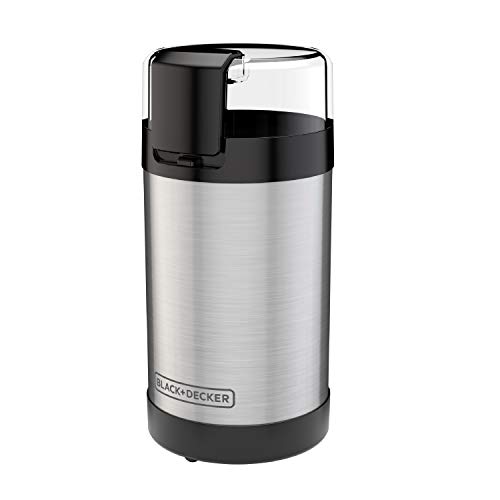
- 1. BLACK+DECKER One-Touch Coffee & Spice Grinder with — Best overall
- 2. Amazon Basics Fast Electric Coffee Grinder for Home Use — Best upgrade
- 3. Wancle Electric Coffee Grinder — Best budget pick
- 4. Hamilton Beach Fresh Grind Electric Coffee Grinder For Up To 12 Cups — Best for families
- 5. Hamilton Beach Custom Grind Electric Coffee Grinder For Up To 14 Cups — Most versatile
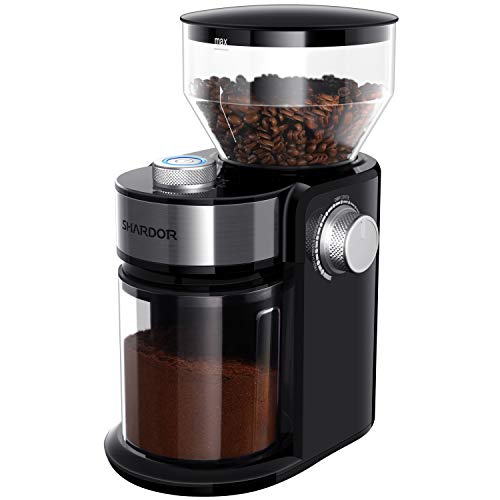
- 6. SHARDOR Electric Burr Coffee Grinder 2.0 — Best premium
- How much bean does each one hold?
- What does a beginner really give up with a blade grinder?
- Will it fit, and what does cleaning involve?
- The verdict
- FAQ
The best electric coffee grinder for beginners is the BLACK+DECKER One-Touch CBG110S, because it pairs a 2/3-cup bean bowl with a 2-year limited warranty and a single push-button you cannot get wrong. If you already know espresso is where you're headed, the SHARDOR Electric Burr Coffee Grinder 2.0 and its 16 grind settings is the smarter first purchase. Everything else in this set trades one of those two things away.
Get this wrong and the failure is specific. You buy a grinder with no warranty, the motor stalls in month five on a bag of oily dark roast, and you go back to pre-ground. Or you buy the model with a dial and 16 settings, never learn what setting 7 means for your brewer, and grind everything at whatever number it shipped on. Neither mistake is about money. Both are about buying a machine that doesn't match how much coffee you actually make.
Best electric coffee grinder for beginners at a glance
| Pick | Bean capacity | Footprint | Price |
|---|---|---|---|
Best overall BLACK+DECKER One-Touch Coffee & Spice Grinder |
2/3 cup | 7.28 x 3.5 x 3.4 in | Check Price |
Best upgrade Amazon Basics Fast Electric Coffee Grinder |
30 g per batch claim | 6.9 x 3.5 x 3.72 in | Check Price |
Best budget pick Wancle Electric Coffee Grinder |
60 g claim | 6.6 x 3.5 x 3.5 in | Check Price |
Best for families Hamilton Beach Fresh Grind |
up to 12 cups brewed | 7.13 x 3.74 x 3.54 in | Check Price |
Most versatile Hamilton Beach Custom Grind |
4-14 cups brewed | 8 x 4 x 4 in | Check Price |
Best premium SHARDOR Electric Burr Coffee Grinder 2.0 |
2-14 cups, 16 settings | 9.5 x 7 x 5 in | Check Price |

Which buyer are you? Four profiles from this set
The six picks sort cleanly into four kinds of coffee drinker. Find yourself here and the rest of the article gets shorter.
- The one-mug-a-day drinker. You brew a single cup, maybe two. The Amazon Basics model claims 30 grams ground in 10 seconds, which is one drip dose. At 6.9 x 3.5 x 3.72 in it hides behind a kettle.
- The pot brewer. Two or more people, a 12-cup carafe every morning. The Hamilton Beach Fresh Grind states capacity in brewed cups rather than grams, up to 12, which is the whole pot in one go.
- The one who wants a dial. You like knowing what setting you're on. The Hamilton Beach Custom Grind has an adjustable selection ring and a 4-14 cup range. The SHARDOR goes further with 16 micro-adjusted settings.
- The someday-espresso drinker. You bought a machine with a portafilter, or you're about to. Only the SHARDOR is a burr grinder, and only a burr grinder gets you repeatable espresso fineness.
Most people reading a guide to the best electric coffee grinder for beginners are in group one or two. That's why the BLACK+DECKER wins: it covers both without asking you to learn anything. Groups three and four are buying a second grinder, whether they know it yet or not.
Blade or burr: what actually decides your first grinder?
Almost every beginner guide compares wattage. That's the wrong number. Only two listings here publish a power figure at all, and the Wancle's 150 watts tells you nothing about how even the grounds come out.
What decides it is the grinding mechanism. Five of these six are blade grinders. A blade grinder is a spinning chopper: it cuts beans into a mix of fine dust and larger chunks, and grind size is controlled by how long you hold the button. One, the SHARDOR, is a burr grinder. A burr grinder crushes beans between two metal surfaces at a set gap, so the grounds come out at a size you selected rather than a size you timed.
That distinction matters more for some brewers than others.
- Drip and French press tolerate uneven grounds well. A blade grinder is genuinely fine here.
- Pour-over benefits from consistency but forgives a mixed grind.
- Espresso does not forgive anything. Uneven grounds channel water and the shot runs sour or bitter with no middle ground.
So the honest answer to blade or burr is: what are you brewing? If the answer is drip, the cheapest blade grinder in this set does the job and the burr grinder is money spent on precision you won't use for a year.
1. BLACK+DECKER One-Touch Coffee & Spice Grinder with — Best overall
The one grinder here that pairs a genuinely simple control with a 2-year warranty, which is the combination a first-time buyer should want.
Best for: a first grinder for drip or French press, one button, nothing to learn Skip it if: you brew espresso and need repeatable fine grinds
Two things separate the CBG110S from the rest of this set. The first is the 2-year manufacturer limited warranty, the longest published coverage here alongside the SHARDOR, and something four of these six listings don't state at all. On a small motorised appliance that grinds hard, oily beans several times a week, that matters more than any feature bullet.
The second is what it doesn't ask of you. There's one push-button. BLACK+DECKER describes it as letting you customise consistency from coarse to fine, which in practice means you hold it longer for finer grounds. That's the whole interface. Nothing to misconfigure on day one.
Capacity is stated as a 2/3-cup bean bowl, which covers a mug or a small pot comfortably. It weighs 1.43 lb and stands 7.28 x 3.5 x 3.4 in, so it's tall and narrow rather than wide. The listing notes a lid-locking safety mechanism that keeps the blades off until the lid seats, and stainless steel blades and bowl.
The trade-off against the field: it sells faster than everything here except the Amazon Basics, but it gives you no numbered grind settings at all. The Hamilton Beach Custom Grind and the SHARDOR both let you dial a size. This one asks you to count seconds.
Pros:
- 2-year limited warranty, longest published in this set
- 2/3-cup bean bowl covers a mug or small pot
- Lid-locking safety mechanism per the listing
- Single push-button, nothing to configure
- Stainless steel blades and grinding bowl
Cons:
- No numbered or dialled grind settings
- Blade mechanism can't match burr consistency for espresso
- Grind size depends on how long you hold the button
- Only two sellers list it
2. Amazon Basics Fast Electric Coffee Grinder for Home Use — Best upgrade
The fastest single-dose grinder here by the manufacturer's own numbers, and the second-cheapest of the six.

Best for: grinding a single drip dose fast with a clear view of the grounds Skip it if: you want a published warranty behind the purchase
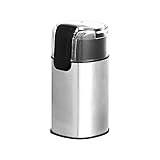
Amazon Basics states 30 grams, or 1 ounce, of beans ground for drip brewing in 10 seconds. That's the only speed figure published across all six listings, and 30 grams is roughly a two-mug drip dose. If your morning is one pour and out the door, that's the whole job in ten seconds.
The clear safety lid is the underrated feature. On a blade grinder you're judging grind size by eye, and a transparent top means you can watch the grounds go from coarse to fine without stopping and unlocking. Four of the other five have opaque or metal lids. This one small thing shortens the learning curve more than any spec on the box.
It's the second-lightest at 1.54 lb and one of the smallest at 6.9 x 3.5 x 3.72 in. Amazon Basics lists a heavy-duty stainless steel grind blade, and the same bowl handles herbs, spices, grains and nuts.
What it gives up is reassurance. No warranty term appears on the listing, no released date, no capacity figure beyond that 30-gram claim. The BLACK+DECKER costs more and publishes a 2-year term. That's the trade you're making.
Pros:
- Claims 30 g of beans ground in 10 seconds
- Clear safety lid shows grind progress
- Second-cheapest of the six picks
- Compact 6.9 x 3.5 x 3.72 in footprint
Cons:
- No warranty term published on the listing
- No stated bean bowl capacity, only a batch claim
- Blade grinder, so no repeatable grind setting
- Thinnest specification sheet in this set
3. Wancle Electric Coffee Grinder — Best budget pick
The cheapest and lightest pick here, with the only stated gram capacity among the blade grinders.
Best for: small kitchens and the lowest possible entry cost Skip it if: you need more than 60g of beans at a time
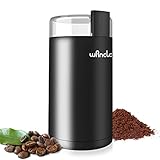
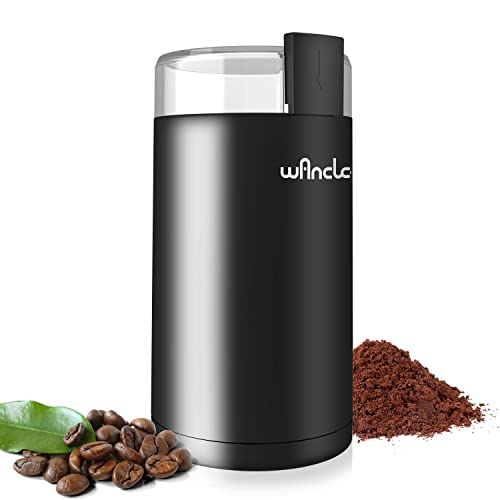
At 0.84 lb the Wancle is barely half the weight of the SHARDOR, and 6.6 x 3.5 x 3.5 in makes it the shortest grinder here. That combination matters in a studio kitchen or a dorm, where the grinder lives in a cupboard and comes out twice a day.
Wancle publishes a 60-gram bean capacity, the only precise gram figure for a bowl in this group. Sixty grams is two generous drip doses, so it comfortably handles one or two mugs and gets tight at pot size. The listing also states 120 VAC at 150 watts, and describes a pure copper motor with a stainless steel blade and bowl, which Wancle credits with keeping beans from scorching during grinding. Treat that as the manufacturer's claim, not a measured result.
Control is momentary: press to grind, release to stop. That's more direct than a timed run and easier to feather when you want coarse grounds. A cleaning brush is included, which only the SHARDOR also lists.
The catch is thin documentation. No warranty appears, no released date, and only one seller lists it. For the cheapest pick that's an acceptable gamble. For a gift it isn't.
Pros:
- Cheapest of the six picks
- Lightest at 0.84 lb, smallest at 6.6 in tall
- Stated 60 g bean capacity
- Cleaning brush included in the box
Cons:
- No published warranty term at all
- Only one seller lists it
- 60 g caps you at about two mugs
- Press-and-hold operation means no hands-free grinding
4. Hamilton Beach Fresh Grind Electric Coffee Grinder For Up To 12 Cups — Best for families
Sized and described in brewed cups rather than grams, which makes it the easy pick if a full pot is the daily target.
Best for: households brewing a full 12-cup pot every morning Skip it if: counter noise and a hand-wash base bother you
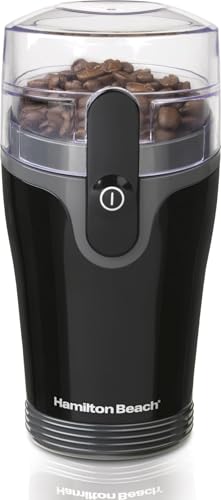
Hamilton Beach frames this one in the unit that actually matters to a family: up to 12 cups of brewed coffee per grind. Every other blade grinder here talks in grams or cup fractions, which means mental arithmetic at 6am. This one matches the number printed on your carafe.
The genuinely useful detail is the dishwasher-safe grinding bowl, which the listing calls out specifically. Coffee oils build up fast, and a bowl that goes in the machine instead of getting hand-scrubbed is the difference between cleaning it weekly and cleaning it never. Hidden cord storage under the base is the other small win for a countertop that stays tidy.
It weighs 1.3 lb, measures 7.13 x 3.74 x 3.54 in, and carries a one-year warranty, half the BLACK+DECKER's term but more than three of these listings publish. Hamilton Beach also claims it's quieter than a leading competitor, which is a comparison against an unnamed product and worth exactly that much.
Against the field, it's the slowest seller of the three mid-and-entry blade grinders here, and its one-button design gives you no grind selection. The Custom Grind sibling adds a dial for more money.
Pros:
- Capacity stated as up to 12 brewed cups
- Dishwasher-safe grinding bowl per the listing
- One-year warranty published
- Hidden cord storage under the base
Cons:
- One-year warranty, half the BLACK+DECKER's term
- No grind size selector of any kind
- Quieter-than-competitor claim names no competitor
- Sells slower than the cheaper Amazon Basics and Wancle
5. Hamilton Beach Custom Grind Electric Coffee Grinder For Up To 14 Cups — Most versatile
The only blade grinder here with both an adjustable grind ring and a hands-free auto-stop, which is unusual at this mechanism.

Best for: someone who wants dial-set grind size without burr pricing Skip it if: you want the shortest learning curve in the set
This is the bridge model. It's a blade grinder, so it can't match burr consistency, but Hamilton Beach fits an adjustable selection ring for grind size and a 4-14 cup range, then adds push-down operation that shuts off automatically. You set it, press once, and walk away. Every other blade grinder here needs your finger on the button the whole time.
The removable bowl is the second practical difference. You lift the bowl out to fill it with beans and lift it out again to pour grounds into your brewer, instead of tipping a whole appliance over a filter basket. Anyone who's spilled grounds down the side of a coffee maker will recognise why that matters.
It's the second-heaviest at 2 lb and measures 8 x 4 x 4 in, a genuinely wider body than the narrow BLACK+DECKER and Wancle. Stainless steel bowl and blades, and the same herbs-and-spices duty as the rest.
Two real problems. No warranty term is published, which is odd for the second-most expensive pick here. And it's by far the slowest seller of the six, which is worth noting when you're paying more than the Fresh Grind for a dial.
Pros:
- Adjustable selection ring sets grind size
- Auto-stop lets it grind hands-free
- Removable bowl for filling and pouring
- 4-14 cup range, widest among the blade grinders
Cons:
- No published warranty despite the higher price position
- The slowest seller of all six picks
- Wider 8 x 4 x 4 in body eats more counter depth
- Still a blade mechanism, so settings are approximate
6. SHARDOR Electric Burr Coffee Grinder 2.0 — Best premium
The only burr grinder in this set, and the only pick that can hold a repeatable grind size across brews.
Best for: a beginner who already knows espresso or pour-over is the goal Skip it if: counter space is tight or you want to spend the least
The CG835B is a different machine from the other five. SHARDOR specifies a flat burr mill with 16 micro-adjusted grind settings, from espresso-fine to French press-coarse, selected by turning a ring. A setting is a physical gap, so setting 9 today is setting 9 next week. That repeatability is the thing no blade grinder can give you.
It also runs unattended. An electric timer dial covers 2 to 14 cups and shuts off when done, and SHARDOR describes a dual safety interlock that requires both the hopper and the grounds chamber locked before it starts. The removable grounds chamber has an anti-spill lid, and a cleaning brush is included. Warranty is stated as 2 years standard, matching the BLACK+DECKER.
The cost is space. At 9.5 x 7 x 5 in it's nearly twice as deep as any blade grinder here, and 2.12 lb makes it the heaviest. Burr grinders also need more cleaning attention, because grounds sit in the chamber and the burrs themselves collect fines.
It's the most expensive pick here, and for someone brewing drip only, that money buys precision they won't taste. Buy it because espresso is the plan, not because it's the best-specified.
Pros:
- Only burr grinder in this set
- 16 micro-adjusted grind settings, repeatable by number
- 2-year warranty, matching the longest here
- Auto-stop timer covers 2 to 14 cups
- Removable grounds chamber and cleaning brush included
Cons:
- Most expensive pick in this set
- Largest footprint at 9.5 x 7 x 5 in
- Heaviest at 2.12 lb
- Burrs and chamber need more regular cleaning than a blade bowl
How much bean does each one hold?
Capacity is where these listings get frustrating, because no two describe it the same way. Here's the translation.
- Wancle: 60 g of beans, stated in grams. About two mugs of drip.
- Amazon Basics: 30 g per batch in 10 seconds. A batch claim, not a bowl size.
- BLACK+DECKER: 2/3 cup of beans by volume. Roughly a mug to a small pot.
- Hamilton Beach Fresh Grind: up to 12 brewed cups.
- Hamilton Beach Custom Grind: 4 to 14 brewed cups.
- SHARDOR: 2 to 14 cups on the timer dial.
A useful rule: 30 grams of beans makes about two 6-ounce mugs of drip. So the Wancle's 60 grams and the BLACK+DECKER's 2/3 cup land in the same neighbourhood, while the two Hamilton Beach models and the SHARDOR are the ones sized for a full carafe. If you brew a pot, the gram-rated grinders mean two runs.
What does a beginner really give up with a blade grinder?
Honest answer: less than the internet suggests, and more than nothing.
You give up repeatability. There's no number to return to, so your Tuesday grind isn't your Monday grind unless you count seconds the same way. You give up fineness control at the espresso end, where a mix of dust and chunks makes shots inconsistent. And you give up walking away, on four of the five blade models, because they need a finger on the button.
What you keep is everything that matters for drip and press: whole beans ground minutes before brewing, which is the single biggest jump in cup quality anyone makes. Pre-ground coffee starts losing aroma within days. A blade grinder fixes that on day one.
The practical fix for unevenness costs nothing. Grind in short pulses rather than one long run, and shake the grinder between pulses so beans at the top drop into the blade path. That gets you noticeably closer to even than holding the button for 25 seconds straight. It's the one technique worth learning before you spend more.
Will it fit, and what does cleaning involve?
Measure before you buy, because the range here is wider than the photos suggest.
Five of these six are between 6.6 and 8 inches tall and roughly 3.5 to 4 inches wide, so they slot into almost any cupboard or sit beside a kettle. The SHARDOR is the exception at 9.5 x 7 x 5 in, which is a real appliance footprint and needs dedicated counter or shelf space with clearance above for the hopper lid.
Cleaning splits the field just as sharply:
- Hamilton Beach Fresh Grind: dishwasher-safe grinding bowl, the only one that states this.
- Hamilton Beach Custom Grind and SHARDOR: removable bowl or chamber, so you clean the part, not the machine.
- BLACK+DECKER, Amazon Basics, Wancle: fixed bowls that you wipe out. Never rinse a fixed-bowl grinder under a tap; the motor sits directly below.
- Wancle and SHARDOR: include a cleaning brush.
For a beginner buying their first electric coffee grinder, a removable or dishwasher-safe bowl saves more hassle over a year than any grind setting. Coffee oils go rancid, and a grinder you can't clean properly starts making stale-tasting coffee out of fresh beans.
The verdict
If you brew drip, French press or pour-over and you want one machine you'll never fight with, buy the BLACK+DECKER CBG110S. One button, a 2/3-cup bowl, a lid that won't run unlocked, and a 2-year limited warranty that four of these six listings can't match. It's the safest default in the set.
If espresso is already the plan, or you know you'll want the same grind every single morning, buy the SHARDOR CG835B instead. Its advantage is exact and it's the only one here with it: a flat burr mill with 16 numbered settings, so a grind size is a position rather than a stopwatch reading. It also matches the BLACK+DECKER's 2-year warranty and adds a 2-14 cup auto-stop.
The cutoff is your brewer. Anything using a paper filter or a mesh press works fine on a blade grinder, and the money saved is better spent on beans. Anything with a portafilter needs burrs, and no amount of pulsing fixes that.
Two conditions flip the middle of this list. If a 12-cup pot is your daily volume, the Hamilton Beach Fresh Grind is sized in brewed cups and has the only dishwasher-safe bowl here. If your kitchen is genuinely tiny, the Wancle at 0.84 lb and 6.6 inches tall wins on footprint alone.
FAQ
Is the best electric coffee grinder for beginners worth buying over pre-ground coffee?
The best electric coffee grinder for beginners is worth it, and it's the single biggest upgrade most home brewers make. Ground coffee loses aroma within days of opening the bag. Grinding whole beans minutes before you brew keeps those volatile compounds in the cup. Even the cheapest blade grinder here, the Wancle, delivers that benefit on day one.
Which is better value, the BLACK+DECKER or the Amazon Basics grinder?
Better value between the BLACK+DECKER and the Amazon Basics depends on what you want covered. The Amazon Basics is cheaper, claims 30 g ground in 10 seconds, and has a clear lid so you can watch the grounds. The BLACK+DECKER costs more but publishes a 2-year limited warranty and a 2/3-cup bowl. Pay more for the warranty if this is a long-term purchase.
Do I need a burr grinder as a beginner, or will a blade grinder do?
You need a burr grinder only if espresso is on your list. A burr grinder crushes beans at a fixed gap, so the SHARDOR's 16 settings repeat exactly. A blade grinder chops, and grind size depends on how long you press. For drip, French press and cold brew, that unevenness barely shows in the cup.
What grind capacity should a beginner look for in an electric coffee grinder?
Grind capacity should match your brewer, not the biggest number available. Roughly 30 g of beans makes two mugs of drip. So the Wancle's 60 g and the BLACK+DECKER's 2/3 cup suit one or two mugs. If you brew a full carafe, choose a model rated in brewed cups: the Fresh Grind covers 12 and the Custom Grind 14.
What mistake do first-time grinder buyers make most often?
The most common mistake is running the grinder in one long burst and never cleaning the bowl. A single 25-second run produces dust and chunks together. Short pulses with a shake between them get you far closer to even. And coffee oils go rancid in an uncleaned bowl, which makes fresh beans taste stale within weeks.
Start with the BLACK+DECKER CBG110S and one bag of medium-roast beans, and grind only what you're about to brew. Pulse it in bursts of three or four seconds, shake between pulses, and stop when the grounds look like coarse sand for a press or table salt for drip. Within a week you'll know by eye what your brewer wants, and that instinct is worth more than any grind setting. If, six months in, you buy an espresso machine, the SHARDOR is waiting and your blade grinder becomes the spice grinder it's also built to be.